October 11, 2024
Learning
This summer a new visitor center opened across the street from Louis and Lucille Armstrong’s two-story house in Corona, Queens.
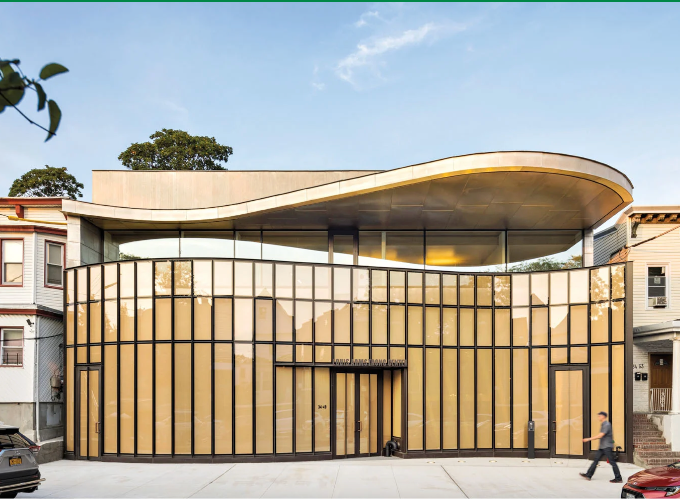
The Louis Armstrong Center showcases rotating exhibitions, a 60,000-piece archive, and a performance venue.
The Louis Armstrong Center showcases rotating exhibitions, a 60,000-piece archive, and a performance venue.
The Louis Armstrong Center showcases rotating exhibitions, a 60,000-piece archive, and a performance venue.
"In 1943 the great American jazz trumpeter Louis Armstrong and his wife, Lucille, settled into what would be the last residence they shared: a two-story house in the New York neighborhood of Corona, Queens. As one of the world’s most famous musicians, Armstrong could have lived anywhere but he made 107th Street his home, and practiced there every day until he died in 1971.
"That house became a National and New York Historic Landmark, thanks to the efforts of Lucille. And thanks to Caples Jefferson Architects, a new, 14,000-square-foot visitor center opened this summer across the street, forming a kind of institutional duet. 'Armstrong’s music didn’t come out of some fancy place,' says principal Sara Caples. 'It came out of a deep tradition, a brilliant tradition, but very much part of a working person’s tradition.' The new Louis Armstrong Center also eschews fanciful gestures while staying in the pocket of the block. Its forecourt welcomes in the neighborhood, while its faceted facade embeds metal fins like music staffs even as the glazing appears to swing." - Jesse Dorris
ARTICLE: Caples Jefferson Architects’ Louis Armstrong Museum Shines in Queens