December 2, 2022
Learning
How the aesthetic, utopian yet pragmatic movement of Solarpunk reimagines a future without a climate catastrophe
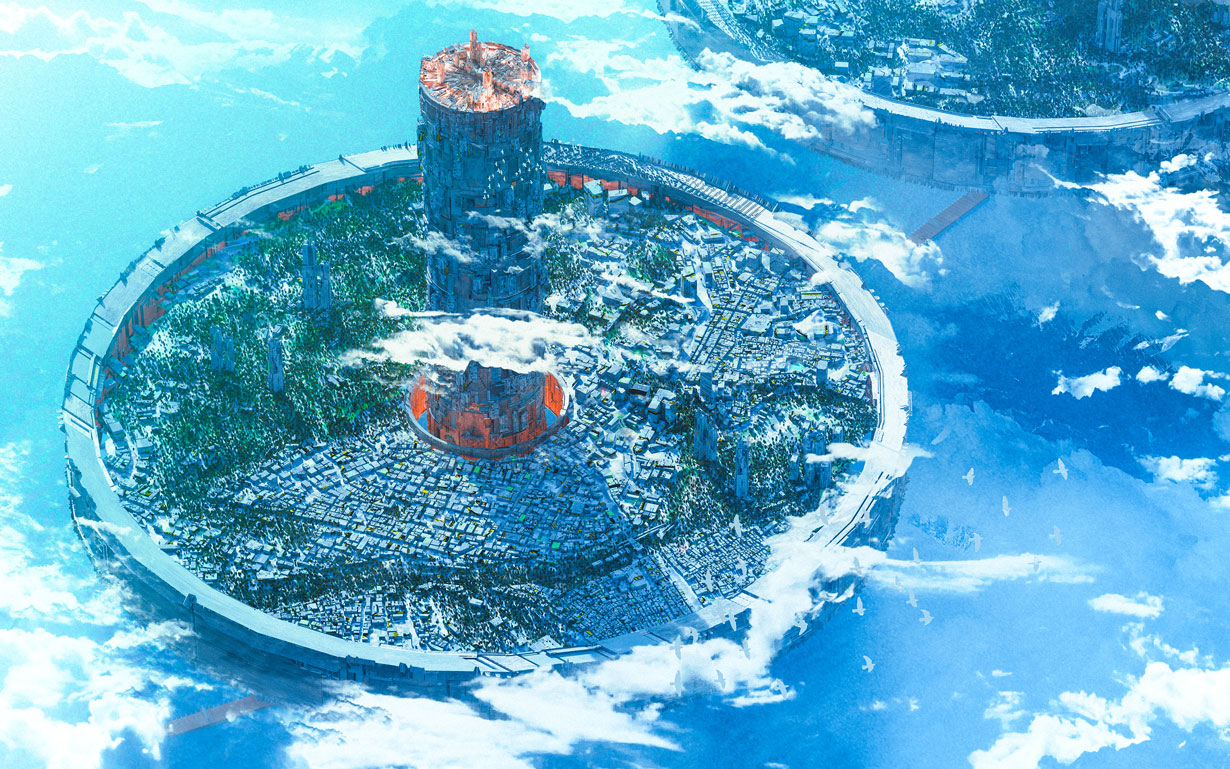
Futuristic concept of cities in the middle of the ocean (Camillo Pasquali, aka millisworlds)
In the early 70s when I was a very idealistic young man, science fiction like Childhood's End by Arthur C. Clarke, and hopeful sociological observation like The Greening of America, by Charles A. Reich, provided springboards of optimism that allowed me to imagine and believe in a new and different way of being.
So, I am thrilled to discover Solarpunk. Thank you Jamie Wolf for the reference. You are so right. Imagining alternative futures that are not dystopian has profound power.
"By its simplest definition, Solarpunk is a literary and art movement which imagines what the future could look like if the human species were actually to succeed in solving the major challenges associated with global warming, from reducing global emissions to overcoming capitalist economic growth as the primary motor of human society. These seemingly titanic tasks are actually pragmatic necessities dictated by scientific knowledge. We know, for example, that it is simply impossible to have infinite economic growth on a finite planet. And yet, this impossibility is exactly where we are still heading towards as a species." - Joey Ayoub
Article: What if We Cancel the Apocalypse?