A catalog of radical hope
I am building a living field guide to hopeful social change—part newsletter, part library, part tool catalog.
Here, radical hope is the stance that we can move toward a good future even when we cannot yet picture what “good” will look like from within a collapsing order. It is not optimism that everything will turn out fine. It is a refusal to despair, paired with a commitment to act even when the old maps no longer apply.
Radical hope looks directly at breakdown and still chooses to plant seeds of a more just, livable world, trusting that new forms of “the good life” can emerge beyond our current imagination.
This work rests on a coherent worldview: we live within an interconnected, living system where inner life, culture, economy, and democracy are inseparable—and where ordinary people can consciously participate in its healing.
The architecture of this catalog is complex and evolving, and I am only beginning to work with it. Over time, I aim to shape these pieces into a guided discovery experience—one that helps us see the landscape emerging right under our feet.
Join me.
FEBRUARY 13, 2026
New and different ways to navigate uncertainty
“Creative action represents an agentic* response… the willingness to think and act in new and different ways in an effort to navigate uncertainty and potential threats during times of crisis.” - Ronald A. Beghetto
* Having the power and freedom to act, rather than just being pushed around by outside forces
CULTURE, TRANSFORMATION
Crisis as catalyst for creative action and innovation
Crises can be deeply troubling and anxiety provoking, and they can also serve as an important catalyst for creative action and innovative outcomes. This is because during times of crisis our typical forms of reasoning and action may no longer serve us. It is precisely during such times that new ways of thought, action and leadership are needed.
ARTICLE: How Times of Crisis Serve as a Catalyst for Creative Action: An Agentic Perspective
LEARNING, SYSTEMS THINKING
Redesigning organizations and markets so they regenerate rather than extract
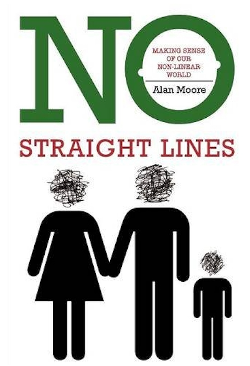
Alan Moore is very clear about one thing: we have reached the limits of the old industrial operating system, built on assumptions of predictability, hierarchy, and linear cause and effect. He describes a “trilemma” of social, organizational, and economic complexity that makes those assumptions untenable: the collision of rising social expectations and inequities, increasingly intricate and interdependent organizational systems, and an economic order built for linear growth and efficiency rather than resilience and shared flourishing.
BOOK: No Straight Lines. Making Sense of Our Non-Linear World
CULTURE, LINGUISTICS
This world that breaks us open also fills us with awe.
To be alive on this planet is to feel the ache of a deep contradiction: the world that wounds us with injustice is the same world that moves us to awe with its beauty. One of the ways that astrologer Rob Brezsny manages this "impossibly wondrous enigma" is to conjure up names for it. "I stitch together poetic and wayward strings of words like prayer beads," he says, "fashioning phrases that acknowledge both the outlandish burden and the exquisite privilege of incarnation."
ARTICLE: In Praise of the Gorgeous Turmoil

HABITAT, PUBLIC SPACES
How small design choices make public spaces truly public
Susie Wise teaches and coaches leaders in innovation, equity design, and inclusive storytelling at the Stanford d.school. She wrote this book to make what she sees as a simple, obvious case: belonging is a fundamental human need and a central goal of equity work. In this compact manual, small enough to serve as a field guide, she equips everyday leaders with practical design tools to build cultures of belonging in the communities that matter to them.
BOOK: Design for Belonging. How to Build Inclusion and Collaboration in Your Communities

ARTICLE: What section of the newspaper does architecture belong in?
ARTICLE: Geothermal could replace almost half of the EU’s fossil fuel power
ARTICLE: Study suggests that bedtime reading is more than a cozy routine; it actively wires children’s brains for empathy and creativity during a key developmental window.
ARTICLE: Worker co-ops and democratic workplaces in the U.S. have grown 34% since 2020 while more than doubling their workforce.
ARTICLE: Geothermal could replace almost half of the EU’s fossil fuel power
ARTICLE: Study suggests that bedtime reading is more than a cozy routine; it actively wires children’s brains for empathy and creativity during a key developmental window.
ARTICLE: Worker co-ops and democratic workplaces in the U.S. have grown 34% since 2020 while more than doubling their workforce.
"I am always doing what I can't do yet in order to learn how to do it."
— Vincent Van Gogh