August 15, 2025
Learning
"Let's tell the stories that allow us to fall in love with how that future could be."
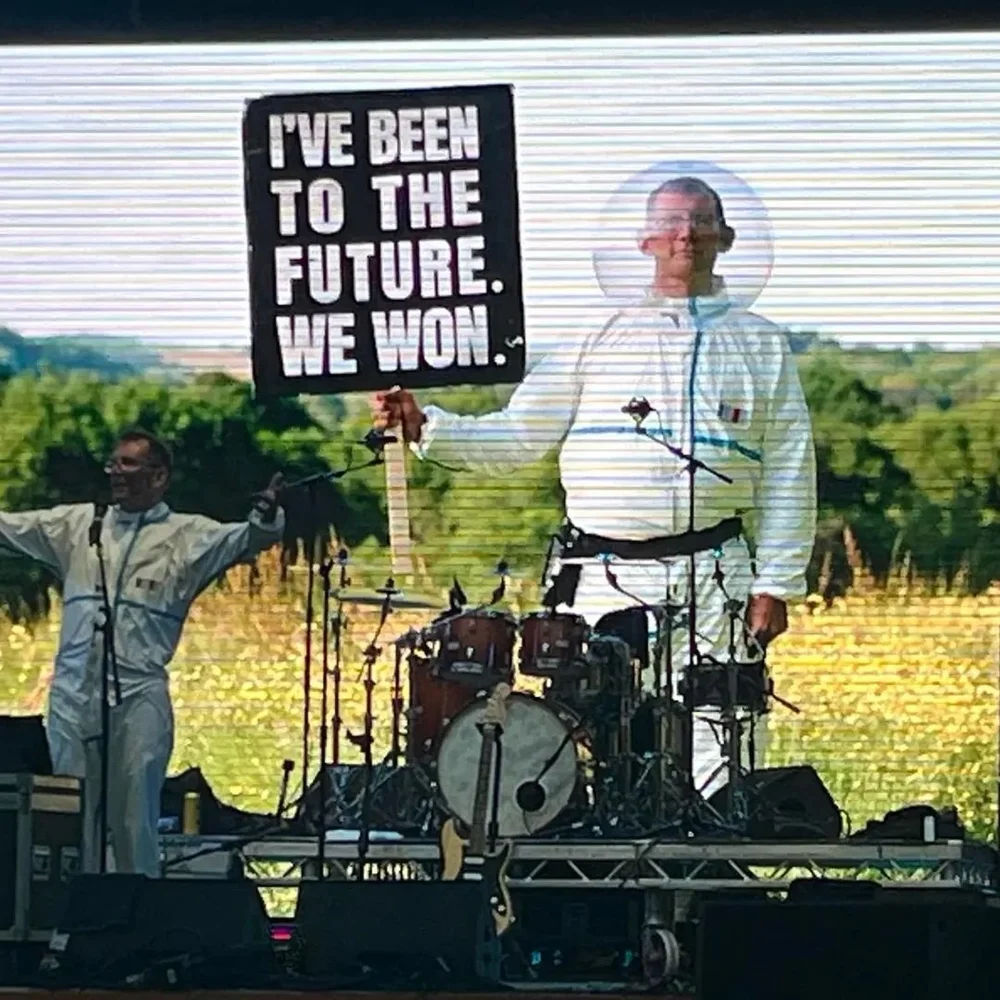
Rob Hopkins is an environmental activist, writer, and visionary. He is the co-founder of the Transition Network. Since its founding in 2005, the movement has championed community-based responses to climate change—initiatives such as local energy production, sustainable food systems, and strengthened social ties—aimed at creating low-carbon, resilient communities. It has since grown to more than 3,000 local chapters in over 50 countries.
Rob Hopkins is an impassioned and articulate advocate for the transformative power of collective imagination. At last year’s Boomtown Festival, he portrayed a “time traveler” from the year 2030, returning with optimistic reports and “evidence” of a transformed, sustainable, and joyful world.
In his imagined future, communities had dramatically improved their environments—transforming streets for cyclists instead of cars, constructing affordable homes from healthy materials, and filling neighborhoods with food gardens while turning schools into lush rainforests. Investments in cycling infrastructure generated substantial healthcare savings, while underground car parks were converted into bicycle storage. The “de-ping” industry—removing excess concrete from urban areas—and roles such as imagination activists had become sought-after professions.
Most importantly, Hopkins underscores that every positive example he describes already exists somewhere in today’s world. These are not fantasies but real initiatives that simply need greater support and bolder ambition.
"Optimists were the backbone of the French Resistance. ... We live in a culture where optimism is frowned upon. I feel like we need optimists more than ever."
VIDEO: Rob Hopkins speech Boomtown 2024 | Boomtown Goes Deeper
RELATED ARTICLE: Conquering the Imagination Deficit and Dreaming Up Delightful Futures