July 25, 2025
Communication
Combatting disinformation starts at home.
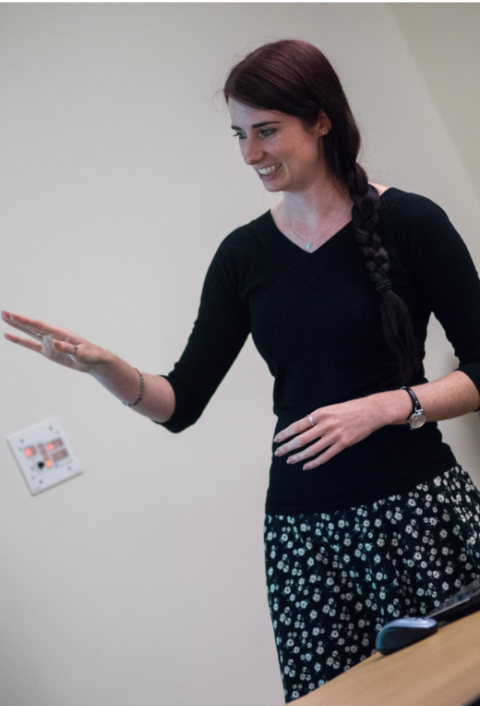
Briony Swire-Thompson is director of the Psychology of Misinformation Lab at Northeastern University. "We just don't have the time," she says, "the cognitive resources or even the motivation to literally fact-check every piece of information that comes our way." But people trust information more when it comes from sources or cultural contexts they are familiar with. So talking with loved ones can make a real difference. The secret is to start from a place of connection, not correction. Photo via MIT Political Experiments Research Lab
The intentional spread of misinformation is a clear and present threat to democracy and civic life. It is dividing communities and making informed decision-making even more difficult. But people do tend to trust information from familiar sources or cultural contexts. So the science is showing that engaging loved ones through empathy and connection is a proven way to resist this reality.
This article offers a primer on addressing misinformation within our own communities, social circles, and families. Audrey Nguyen draws on expert insights to emphasize the importance of building trust and sustaining dialogue, helping people develop the skills to critically assess information over time. The key takeaway is that combating misinformation is most effective when it begins with human connection—not confrontation or immediate correction.
In recent years, I’ve found myself avoiding certain family members because of my own deeply rooted judgment, judgement that is often accompanied by an unspoken incredulous question: “How could you?!” But collective wisdom suggests I need to learn to approach these relationships with curiosity instead.
Could understanding someone's life experiences help me grasp why they might be vulnerable to misleading content? Might taking the time to learn about their story begin to build bridges in and of itself?
ARTICLE: To Combat Misinformation, Start With Connection, Not Correction