May 29, 2026
Civics
The legitimacy gap in democracy is no accident. It’s a feature of the design.
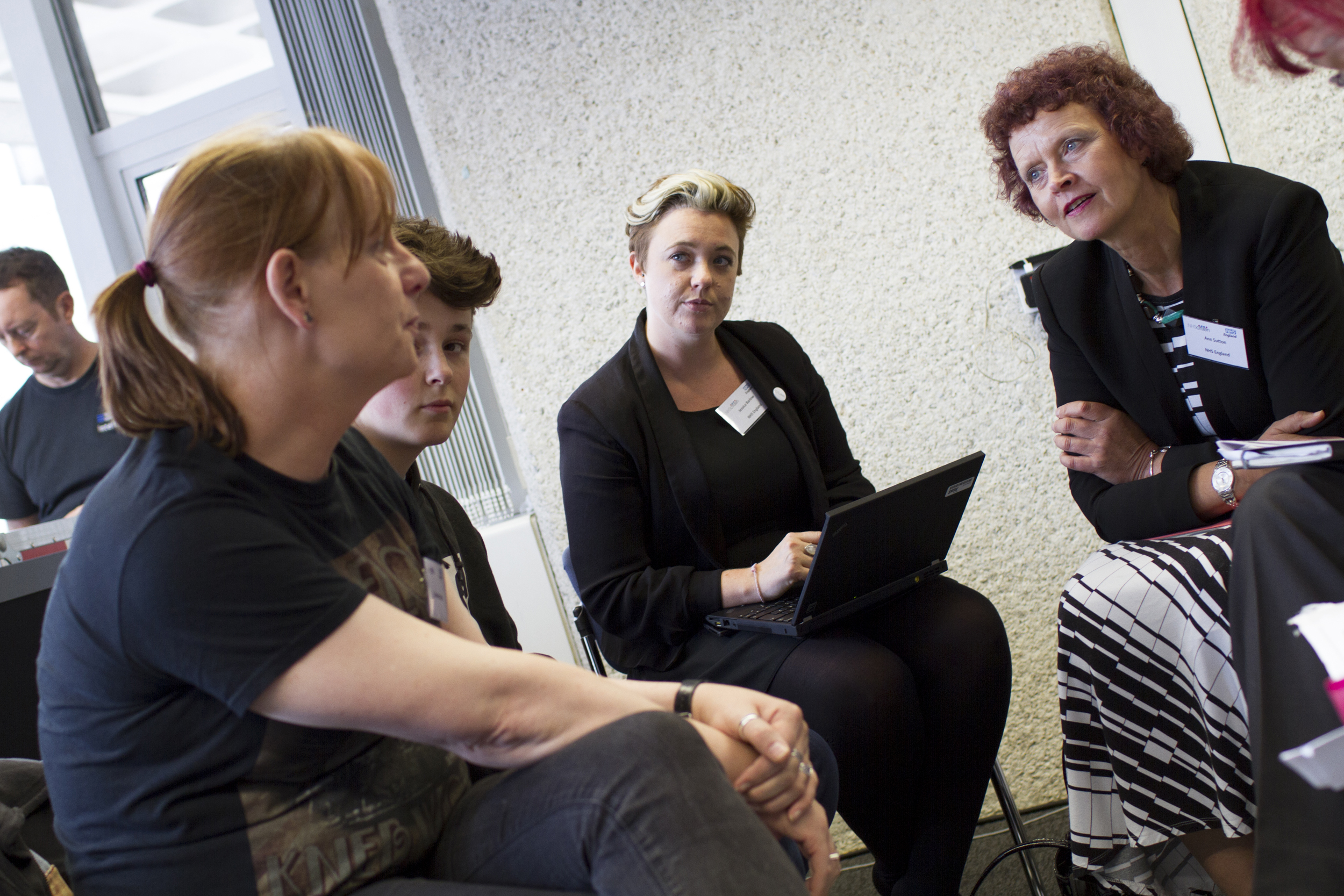
A National Health Service (England) citizens’ assembly on gender identity services offers an example of what democracy can look like when it becomes an actual practice of shared self-governance rather than simply periodic voting. Image via NHSCitizen
Jeremy Lent knows the modern economy from the inside. He built a successful internet company, then came to believe that the very systems rewarding him were also producing loneliness, inequality, ecological damage, and civic decay. Since then, he has turned his attention to a harder question: why our political and economic institutions so often concentrate power upward instead of distributing it outward.
In this article, Lent argues that what Americans call “democracy” was never fully designed to reflect the will of ordinary citizens. Electoral systems, he suggests, were built to filter and manage public power rather than deeply share it. The frustration, polarization, and distrust many people now feel are not temporary glitches but symptoms of a structure behaving largely as designed.
If political success depends on money, media attention, and allegiance to entrenched interests, then short-term thinking and public alienation become predictable outcomes. The system produces exactly the kind of politics it rewards.
But Lent is not writing a manifesto of despair. He points instead to democratic experiments already taking shape around the world: citizens’ assemblies chosen by lottery, digital participation platforms that help communities deliberate together, and local governance projects that give ordinary people direct experience in shared decision-making. He sees these not as fringe experiments, but as early models of a more participatory and life-centered civic culture.
For readers of Love & Work, the deeper invitation is clear. If democracy is something people must practice—not merely consume every few years at the ballot box—then the work ahead involves rebuilding the habits and institutions of shared responsibility from the ground up. Lent’s article offers a glimpse of what that future might look like: less domination, more reciprocity; less extraction, more stewardship; politics shaped more like a living system than a machine.
ARTICLE: “Democracy” Was Never Designed to Work — But Something Better Is Emerging