May 1, 2026
Economics
The purpose of economic life is to sustain people and places, not to sacrifice them to the gains of a few.
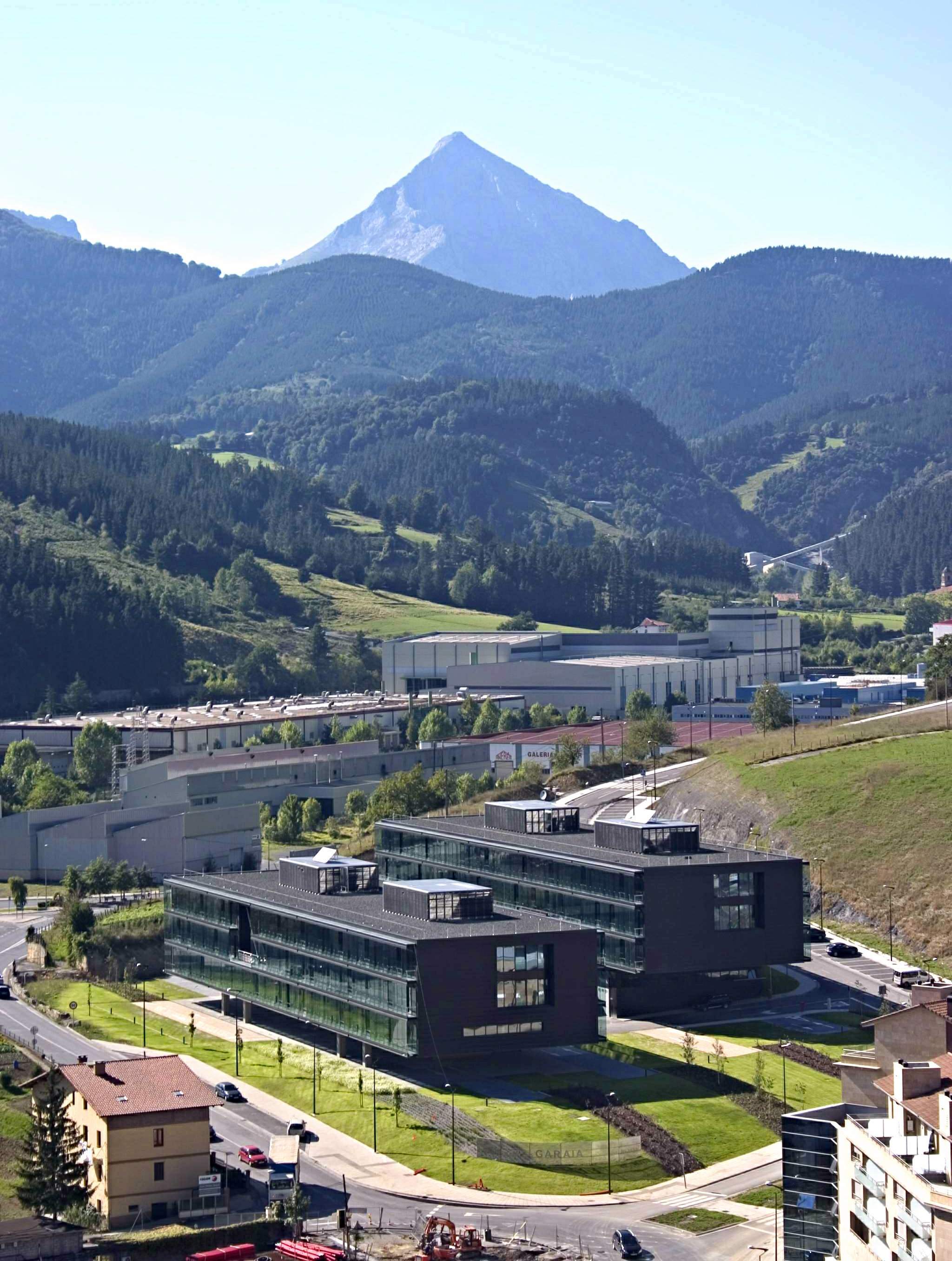
Polo Innovación Garaia — Mondragón, Basque Country, Spain. The facility is a technology and innovation park at the heart of the Mondragón cooperative ecosystem. Garaia brings together cooperative enterprises, Mondragón University, and R&D centers on a shared campus focused on advanced manufacturing, electronics, and digital transformation. Its core purpose is knowledge transfer — moving research directly into cooperative enterprises that keep ownership, innovation, and jobs rooted in the region.
Most of us were handed an economy we didn’t design and weren’t asked about. We were taught to navigate it — find work, manage money, build security — but not to question its premises. The premises were presented as facts: people are primarily self-interested; competition drives progress; growth is the measure of health. Yet these are not facts. They are choices. And choices, as it turns out, can be changed.
The economy we have was built to do something specific: protect ownership, defend property, and reward those who already have capital to deploy. It does that job remarkably well. What it does less well — what it was not designed to do — is take care of people, sustain the living systems we depend on, or think seriously about the people who will inherit what we leave behind. Those are not market failures. They are design features.
There is a different kind of economy available to us — not as a utopian dream, but as a growing body of practice and evidence. It starts from a different premise: that the purpose of economic life is to sustain people and places, not to sacrifice them to abstract growth. That wealth which never returns to the communities that generated it is a kind of loss, no matter how legal it may be. That an economy which burns through the living world is not actually producing wealth — it is borrowing against a future it intends never to repay.
This reorientation shows up in many forms. Cooperative enterprises that share ownership and decision-making with the people doing the work. Community land trusts that protect housing and green space from speculative pressure. Anchor institutions — hospitals, universities, municipal governments — that use their purchasing power to strengthen regional economies rather than extract from them. Open-source research that treats knowledge as a commons rather than a proprietary asset. Cities redesigning their budgets around human wellbeing rather than GDP. Each of these is a different answer to the same question: what is the economy actually for?
The ideas that I gather and reframe in this catalog circle this territory from many directions — the living world as teacher, inner life as civic infrastructure, collective intelligence, the long game as a way of belonging rather than winning. What runs beneath all of them, rarely named but always present, is this economic question: who benefits from the current arrangement, who is harmed by it, and who gets to decide?
An economy organized around people, the living world, and the future is not waiting for permission. It is already being built — through decades of sometimes impatient institution-building, slowly accumulating civic trust, and the stubborn refusal of ordinary people to accept that the rules of the economy are natural law. Again, they are not. They are agreements. And agreements can be revised.
The work is a long haul, and the immense forces defending the current arrangement are real and very well-resourced. But here’s what I keep coming back to: work that tends to what really matters feels deliciously different than work that just defends what’s failing. One leaves you tired in a way that restores. The other just leaves you tired.
An economy as a practice of belonging means asking, in every decision where we have any agency at all: whose well-being does this serve? What relationships does this strengthen or weaken? What kind of world does this make more possible?
These questions are not reserved for economists and legislators. They are available to anyone willing to ask them — in a workplace, a neighborhood, a town hall, a purchasing decision, a vote, a conversation about what we owe each other and what we are willing to build together.
That is where the long game is actually played.