May 2, 2025
Learning
Curiosity can serve as an antidote to the anxiety that arises in uncertain times.
When we feel anxious or depressed, it’s often because we’ve latched onto a fixed idea about how the future will unfold. That attachment can close us off to possibility. Curiosity offers a way out—it shifts our focus from certainty to inquiry, helping us stay open rather than stuck.
By anchoring ourselves in questions instead of rigid expectations, we invite new perspectives and pathways forward. This shift can ease fear and make space for movement.
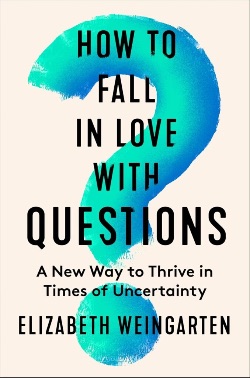
Elizabeth Weingarten, a journalist and applied behavioral scientist, explores this idea in her new book, How to Fall in Love with Questions. She shows how questions can fuel curiosity and help us better understand who we are and what we want.
“Asking questions opens up different possibilities. If someone can be curious, they are less likely to narrow in on one idea that could be generating that feeling of stuckness, or apprehension about the future.”
"It’s easy to get curious about queries separate from ourselves ('Why do only some leaves turn colors in the fall?') or even about exciting unknowns in our lives ('What’s the surprise my family is planning for my birthday?'). It’s harder to access a sense of curiosity about the parts of our lives that are scary or painful. In the moment, it feels easier to distract ourselves from that pain. Or we may let it hijack us: Our fears and anxieties take the wheel, driving us to places we’d rather not be."
BOOK EXCERPT: In Uncertain Times, Get Curious