April 25, 2025
Learning
“Hope does not deny the evil, but is a response to it.”
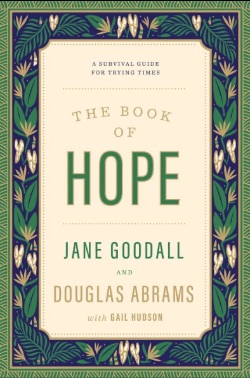
This is a book of encouragement that begins with a visit to Jane Goodall in her kitchen. She shares her belief that hope is a survival trait—one that must be cultivated and acted upon, especially in the face of overwhelming challenges. Goodall emphasizes that hope is not wishful thinking, but an active, engaged mindset that requires setting attainable goals, identifying realistic pathways to achieve them, and maintaining confidence in both oneself and the support of others.
Through stories from her own life, she reminds us that humans possess unique intellectual capacities—language, problem-solving, and the ability to build communities. Drawing from her experiences, she argues that this intellect can be harnessed to confront the planet’s most urgent problems, provided it is guided by a renewed moral code and a deep sense of responsibility for the interconnectedness of all life.
“Children—and adults—who have a growth mindset are much more successful than those who have a fixed mindset about themselves and the world.”
“The harmony of natural law … reveals an intelligence of such superiority that, compared with it, all the systematic thinking and acting of human beings is an utterly insignificant reflection.”