January 24, 2025
Civics
Americans are now spending more time alone than ever. It’s changing our personalities, our politics, and even our relationship to reality.
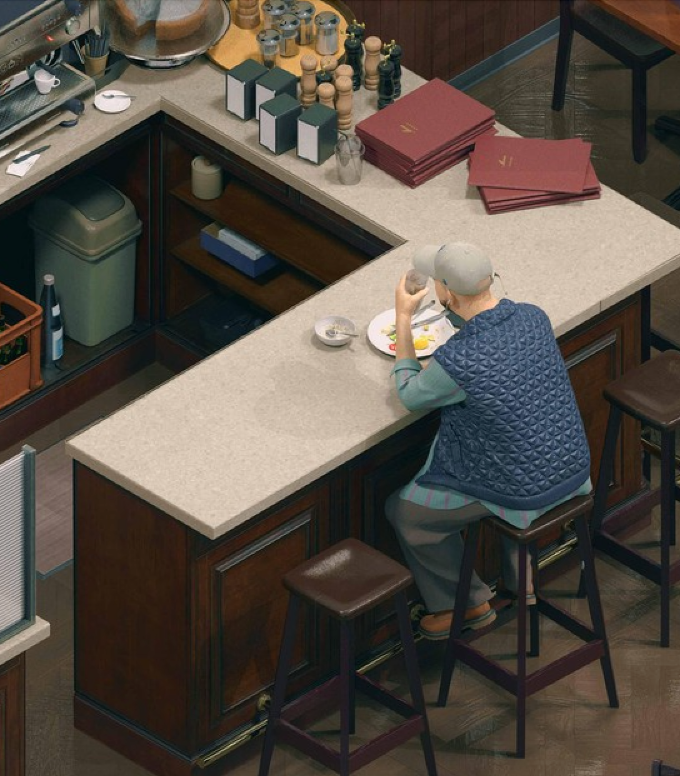
Illustration by Max Guther
This article by Derek Thompson for The Atlantic highlights a sobering reality: Americans are spending more time alone now than at any other point for which reliable data exists, dating back to 1965. This trend has contributed to decreased happiness, increased political polarization, and shifts in personality and perception.
The good news is that research consistently shows social interactions make people happier than they anticipate. The solution to this growing isolation may be surprisingly straightforward: resisting the "convenience curse" of easy home entertainment and intentionally fostering social interactions by joining more groups and activities.
Thompson argues that regular social connection is vital not only for individual well-being but also for the strength of communities and the health of democracy itself.
"The first half of the 20th century was extraordinarily social. From 1900 to 1960, church membership surged, as did labor-union participation. Marriage rates reached a record high after World War II, and the birth rate enjoyed a famous “boom.” Associations of all sorts thrived, including book clubs and volunteer groups. The New Deal made America’s branch-library system the envy of the world; communities and developers across the country built theaters, music venues, playgrounds, and all kinds of gathering places.
"But in the 1970s, the U.S. entered an era of withdrawal, as the political scientist Robert D. Putnam famously documented in his 2000 book, Bowling Alone. Some institutions of togetherness, such as marriage, eroded slowly. Others fell away swiftly. From 1985 to 1994, active involvement in community organizations fell by nearly half. The decline was astonishingly broad, affecting just about every social activity and every demographic group that Putnam tracked.
"What happened in the 1970s? Klinenberg, the sociologist, notes a shift in political priorities: The government dramatically slowed its construction of public spaces. 'Places that used to anchor community life, like libraries and school gyms and union halls, have become less accessible or shuttered altogether,' he told me. Putnam points, among other things, to new moral values, such as the embrace of unbridled individualism. But he found that two of the most important factors were by then ubiquitous technologies: the automobile and the television set.'" - Derek Thompson
ARTICLE: The Anti-Social Century