March 27, 2026
Communication
Essential tools for architects, artists, designers, developers, engineers and makers
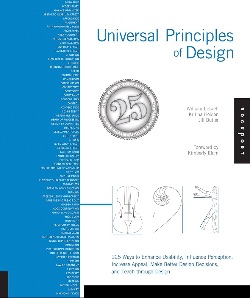
I wish there were more books like Universal Principles of Design. It’s a field guide to the invisible forces shaping how we live, decide, and relate.
Its premise is simple but consequential: design is a powerful force. When we understand and use it well, it supports our intentions; when we don’t, it works against them.
Structured as short, two-page entries, the book reads less like theory and more like a shop manual for human environments. Each spread introduces a principal—framing, entry points, the golden ratio, signal-to-noise ratio, chunking—and pairs it with clear diagrams. Open it anywhere, and you’ll start noticing those patterns everywhere: in a ballot, a website, a meeting agenda, a street corner.
What makes it especially useful is its range. It draws from psychology, human–computer interaction, architecture, and engineering, combining quantitative principles with qualitative ones like framing, consistency, and trust.
For anyone working to design better institutions, clearer communications, or more humane systems, this is a practical companion—a shared vocabulary and pattern library that has earned a permanent place in my workspace within arm’s reach.
BOOK: Universal Principles Of Design, 200 Ways to Increase Appeal, Enhance Usability, Influence Perception, and Make Better Design Decisions