March 13, 2026
Nature
What trees can teach us about caring for a shared world
The Hidden Life of Trees helped bring to public awareness what Suzanne Simard’s groundbreaking research on forest networks had revealed: how forests actually live and relate. Rather than collections of isolated, competing trees, forests are interdependent communities and complex communication networks that teem with hidden activity—places where trees share resources, respond to threats, and cooperate to sustain shared life.
Peter Wohlleben’s portrayal of mycorrhizal networks—popularized as the forest’s “wood wide web”—has astonished readers, turning invisible fungal threads into a vivid image of trees exchanging resources and information below ground. Even as scientists debate how far these networks should be understood as “cooperative,” his storytelling has significantly shifted public imagination toward seeing forests as deeply connected, relational systems rather than collections of solitary individuals.
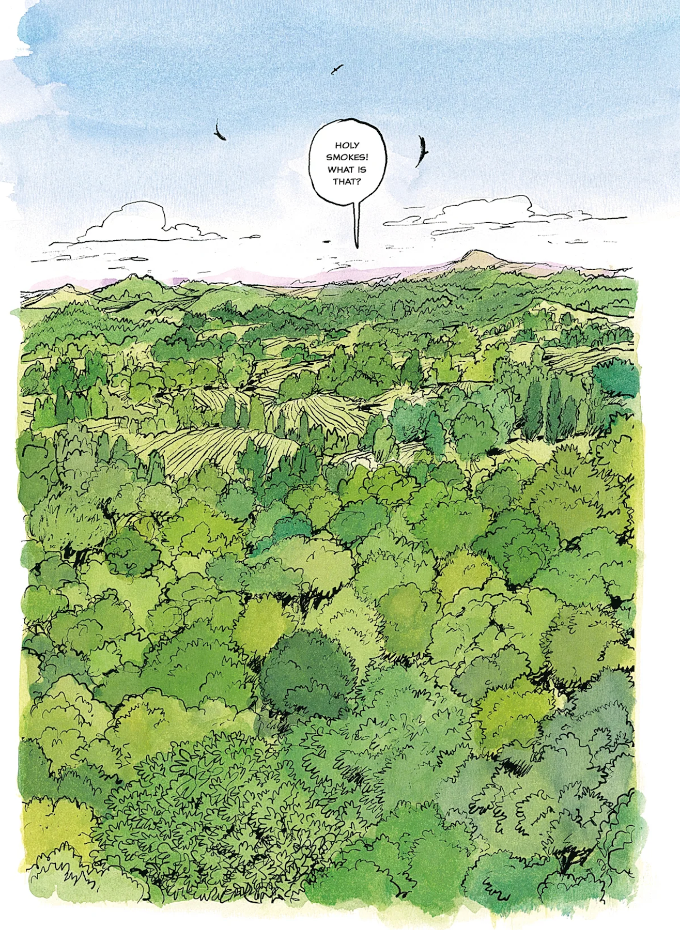
Now a new graphic adaptation brings these intertwined insights to life through vivid, accessible visuals that allow readers to see the hidden dynamics of forests more clearly. The graphic form makes invisible relationships tangible, translating complex ecological ideas into intuitive images.
BOOK: The Hidden Life of Trees: A Graphic Adaptation