August 23, 2024
Civics
Mapping the transition from today to tomorrow
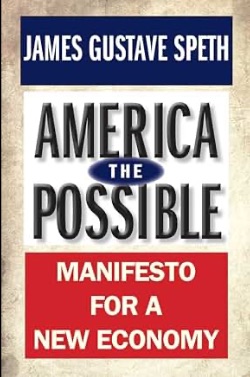
Gus Speth is author of They Knew: The U.S. Federal Government’s Role in Causing the Climate Crisis (MIT Press). He has served as Dean of the Yale School of the Environment, as President of the World Resources Institute, and as Administrator of the UN Development Programme. He was Chair of the US Council on Environmental Quality during the Carter Administration. He knows his way around policy and politics.
He wrote this book 12 years ago. He said then that while it is up to us as citizens to inject values of justice, fairness, and sustainability into our system, it was abundantly clear that reformist approaches to our government were not enough.
"Pursuing reform within the system can help, but what is now desperately needed is transformative change in the system itself. To deal successfully with all the challenges America now faces, we must therefore complement reform with at least equal efforts aimed at transformative change to create a new operating system that routinely delivers good results for people and planet."
He mapped ten specific transformations that held "the key to moving to a new political economy."
He acknowledged that such systemic "change along these dimensions will require a great struggle, and it will not come quickly. The new values, priorities, policies, and institutions that would constitute a new political economy capable of regularly delivering good results are not at hand and won’t be for many years."
As we dare imagine what it might be like to have national leaders who support justice, fairness, and sustainability, the utility of this guide to "creating a new operating system" might be more apparent than it was in 2012.
BOOK EXCERPT: America the Possible: A Manifesto
VIDEO: America the Possible: Manifesto for a New Economy (Gus Speth)
SHORT SUMMARY VIDEO: America the Possible